 · EST. 1998
Turkey vs China for Plus-Size Wholesale: an Honest Comparison
Turkey and China solve different problems for a boutique. This comparison sets out where each one wins, with the scenarios where China is the better answer stated honestly.
Almost every boutique owner asks this question at some point, and almost every answer they find online is written by someone selling one of the two options. We sell one of them, so treat this as an interested opinion — but an honest one, including the part where China is the better choice.
The short version: China and Turkey are not really competing for the same order. China is built for volume and depth in a single style. Turkey is built for speed, variety and small commitments. Which one is right depends on how your shop actually makes money, not on which country is cheaper per piece.
The five differences that actually decide it
1. What you have to commit on a first order
This is usually the deciding factor for an independent boutique. Chinese apparel manufacturing is generally organised around per-style minimums — commonly several hundred pieces of the same model, sometimes per colour — because the economics of a production line depend on run length. Trading companies and market platforms lower that threshold, but then you are buying from an intermediary rather than a factory, and the fit and repeatability questions get harder to answer.
Turkish plus-size wholesale generally works differently, because a large part of it is sold from existing stock in size sets rather than produced to order. Our own minimum is $400 across the whole order, which you can spread across several styles. That is the difference between testing five ideas and betting on one.
2. How long it takes to arrive
For a European, Balkan, Gulf or North African buyer, the gap here is large. In-stock goods from Istanbul dispatch within 24–48 hours, and transit is measured in days — very roughly two to six by road or air depending on the destination. From China, you are typically looking at production time plus several weeks of sea freight, or air freight at a cost that changes the whole calculation.
Confirm actual transit with your carrier, since routes and seasons move it. But the order of magnitude is not in dispute: weeks versus days.
3. Pattern and fit on European bodies
This is the difference buyers underestimate before their first order and never forget afterwards. Sizing systems are not just numbers; they encode assumptions about body proportion. A garment graded for one regional block and relabelled for another will often be technically the right size and practically the wrong fit — most visibly in the armhole, the sleeve width and the distance between shoulder and bust.
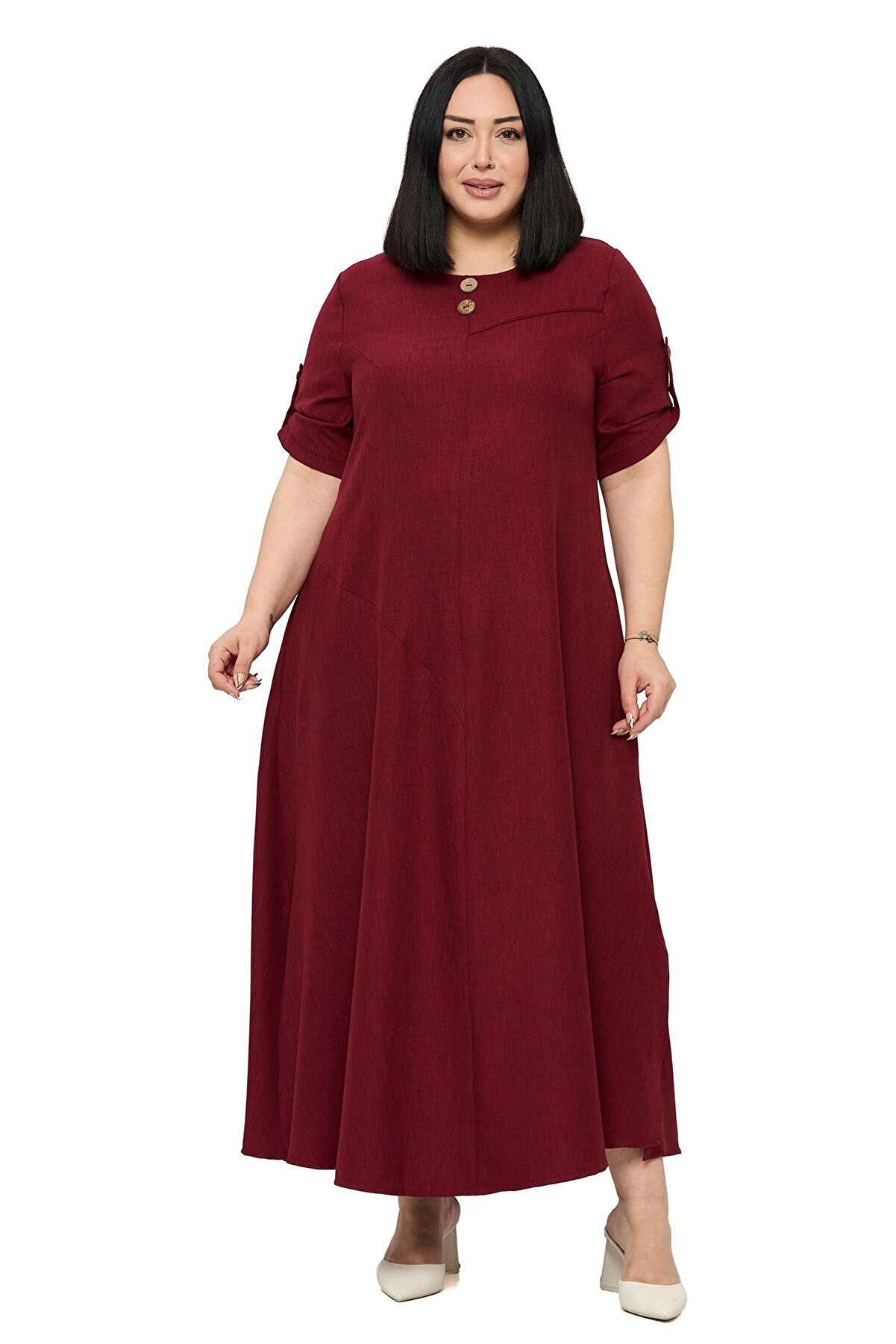
Turkish sizing uses continental European numbering and Turkish plus-size manufacturers grade around European proportions as a matter of routine. We produce EU 34–60, and above size 46 that grading work is what decides whether a dress sells or comes back. If size mapping is new to you, our measurements guide sets out the conversions and the cautions.
4. How fast you can reorder a winner
Every boutique's most profitable moment is the week a style proves itself. Whether you can act on that depends entirely on how quickly you can get more of it.
With 600+ models held in stock, a proven style can usually be repeated within the same selling window. With a long-haul production order, by the time the repeat lands the moment has often passed. This single mechanic — reorderability — is worth more to a small shop than a few percent on unit price.
5. Communication, samples and the cost of a misunderstanding
Where China is genuinely the better answer
There are real scenarios where we would tell a buyer to look east rather than to us:
- Very high volume in a single style. If you are ordering thousands of pieces of one model, per-unit cost dominates everything else and long production runs are exactly what Chinese manufacturing is built for.
- Deep private-label programmes with long planning horizons. If you plan twelve months ahead and hold your own stock, the lead time stops being a disadvantage.
- Specific technical categories. Some product types — certain performance fabrics, particular hardware or trims, specialised knitwear machinery — have deeper supply chains in Asia.
- Price-led positioning at scale. If your business model is lowest-price volume retail rather than curated boutique selling, the arithmetic changes.
The cash-flow difference nobody mentions
Unit price is the number everyone compares. Cash tied up per style is the number that decides whether a small shop survives its second year.
Consider the same budget spent two ways: several hundred pieces of one model, or a spread across several styles and a full size run. The second version tells you what your customers actually want within weeks. The first version tells you the same thing much later, and only about one model. For a shop still learning its own demand curve, information is worth more than margin.
Practical tip: judge sourcing decisions by cash tied up per style, not by price per piece. A cheaper garment you had to buy 500 of is not cheaper if 300 of them are still on the rail in six months.
A fair way to decide: run both for one season
If you genuinely cannot choose, do not choose in the abstract. Run a controlled comparison:
- Place a small Turkish order across two or three styles in a category you already sell — dresses are where most new buyers start.
- Place your intended Chinese order in parallel, in the category where you believe volume economics favour it.
- Record sell-through per style and per size for both, over the same eight-week window.
- Compare not just margin but rotation, returns and how many customers left without buying because the size was gone.
- Decide with your own numbers rather than with anyone's marketing.
Most boutiques that run this exercise end up with a mix: long-haul for the few styles they buy deep, and a fast supplier for everything else. That is a perfectly rational answer.
What to ask before you commit to either
- What is the minimum, per style and per colour — not just per order?
- What is the total lead time, from confirmed payment to goods in my shop, including shipping?
- Can this exact style be repeated in eight weeks, and at what minimum?
- What are the flat measurements of the largest size I intend to stock, not the sample size?
- What is the composition, weight and shrinkage of the fabric, in writing?
- Who do I speak to when something is wrong, and how quickly do they reply?
The answers to those six questions tell you more than any country-level comparison, including this one.
The honest conclusion
If you are a boutique that needs variety, small commitments, European fit and the ability to reorder a winner while it is still winning, Turkey is the more sensible base. If you are buying deep into a handful of models at volume and can plan months ahead, China's economics are hard to beat and you should use them.
If you want to test the fast route with minimal exposure, that is what the $400 minimum exists for. Build a list from the catalogue, send it on WhatsApp to +90 555 336 47 86, and we will issue a proforma invoice. For a realistic first-order structure, see planning your first $1,000 wholesale order, and for how prices are built up, the 2026 price guide.
Frequently asked questions
Is wholesale clothing from Turkey more expensive than from China?
Per piece, Chinese production at volume is usually hard to beat, because long production runs spread fixed costs across many units. Per order, Turkey is often cheaper for a boutique because you commit far less capital, pay less freight per delivery on short routes, and carry less unsold stock. The honest comparison is landed cost against rotation, not invoice price against invoice price.
What is the minimum order difference between Turkey and China?
Chinese apparel manufacturing is generally organised around per-style minimums, commonly several hundred pieces of the same model and sometimes per colour, because production economics depend on run length. Turkish plus-size wholesale is largely sold from existing stock in size sets, so minimums apply to the order rather than to each style. Our minimum is $400 for the whole order, which you can spread across several styles.
How much faster is delivery from Turkey?
In-stock goods leave Istanbul within 24 to 48 hours and transit to nearby markets is measured in days rather than weeks, while long-haul sourcing typically involves production time plus several weeks of sea freight. Air freight from Asia closes the time gap but changes the cost calculation substantially. Confirm actual transit times with your own carrier, since routes and seasons move them.
Does Turkish sizing fit European customers better?
Turkish sizing uses continental European numbering and Turkish plus-size manufacturers grade around European body proportions as standard practice, which usually shows above size 46 in the armhole, sleeve width and shoulder-to-bust distance. That said, no origin guarantees fit on its own — always work from the actual flat measurements of the largest size you plan to stock rather than from the label. Ask for those measurements before you confirm any order.
When does sourcing from China make more sense?
When you are buying very deep into a small number of styles, when you run a private-label programme with a long planning horizon, when you need a technical category with a deeper Asian supply chain, or when your business model is price-led volume retail. In those cases the per-unit economics of long production runs genuinely outweigh the speed advantage of a nearer supplier. Being honest about which model your shop follows saves expensive mistakes.
Can I use both?
Yes, and many boutiques do exactly that: long-haul sourcing for the handful of styles they buy deep and plan far ahead, and a fast nearby supplier for variety, replenishment and testing. The two approaches solve different problems, so treating them as rivals is usually a mistake. Run both for one season and compare sell-through with your own numbers before settling.
How quickly can I reorder a style that sells out?
That depends entirely on whether the style is held in stock, which is why it is worth asking before you build your assortment around anything. With more than 600 models held in stock, a proven style can usually be repeated within the same selling window rather than the following one. Ask specifically which of your chosen styles can be repeated, and reorder as soon as a style proves itself rather than when the rail empties.
How do I test a Turkish supplier with low risk?
Keep the first order small but spread across two or three styles so you are judging consistency rather than luck, and ship it fast so the feedback loop stays short. Our minimum of $400 is designed for exactly that kind of test, and in-stock items dispatch within 24 to 48 hours. Send your list on WhatsApp, ask for the flat measurements and fabric details in writing, and confirm the proforma invoice before paying.