 · EST. 1998
Starting a Plus-Size Boutique: Your First $1,000 Order
$1,000 is enough to open a plus-size boutique properly — if you spend it on six models with depth instead of thirty models with one piece each. Here is the arithmetic, the mix and the four-week plan.
The most common way a first wholesale order fails is not bad taste. It is spreading a small budget across too many styles, ending up with one piece in one size of everything, and having nothing left to reorder the two models that actually sold. A first order is not a shop — it is an experiment with a budget attached. This guide shows exactly how to plan $1,000 into a rail that tells you something useful. Disentis Modest has produced in our own Istanbul workshop since 1998 across 600+ models in sizes 34–60, with a $400 minimum order, so first orders are something we see every week.
What "$1,000" Actually Has to Cover
Before you choose a single model, decide which of these two sentences describes your money — because they lead to very different orders.
- Plan A — $1,000 is everything you have. Goods take roughly 60–65%, freight and duty take 30–35%, and you keep about 5% as a buffer. That is around $620 in goods, which at a $14 average is 44 pieces.
- Plan B — $1,000 is your goods budget. Add your landed multiplier on top — typically 1.4–1.7× depending on your market — so plan for $1,600–1,750 in total capital, giving you roughly 70 pieces.
- Either way: the minimum order is $400, so both plans clear it comfortably and leave you room to choose properly rather than scrape a threshold.
- The number that matters: not what you paid the supplier, but what each piece costs standing in your shop. Calculate that once and use it for every decision below.
Practical tip: write your landed cost per piece on a sticky note before you browse anything. Buyers who shop with the wholesale price in their head consistently overbuy, because $14 feels cheap and $24 makes you think.
How Many Models, and How Many of Each
This is where most first orders go wrong. The instinct is variety; the arithmetic says depth. With 44 pieces you can either buy 44 models one piece each — and learn nothing, because a single sale in a single size proves nothing — or buy 6 to 8 models with 6 pieces each, and finish the month knowing which two to reorder.
- 6 pieces per model in a 1-2-2-1 curve across four consecutive sizes. That is the smallest quantity that still gives you a readable result.
- 6 models if your budget is Plan A (36 pieces core, 8 spare for a second buy on a strong style).
- 8–10 models if your budget is Plan B, still at 6 pieces each.
- Never fewer than 4 sizes per model. A customer who finds the dress but not her size is a lost sale and a lost customer, not a near miss.
- Never more than 10 models on a first order. Beyond that you cannot photograph, merchandise or evaluate them properly.
The Category Mix That Works for a First Rail
A first order should be able to dress one woman completely and photograph well. That means a spine of easy-selling pieces, one or two things that stop people in the street, and nothing experimental.
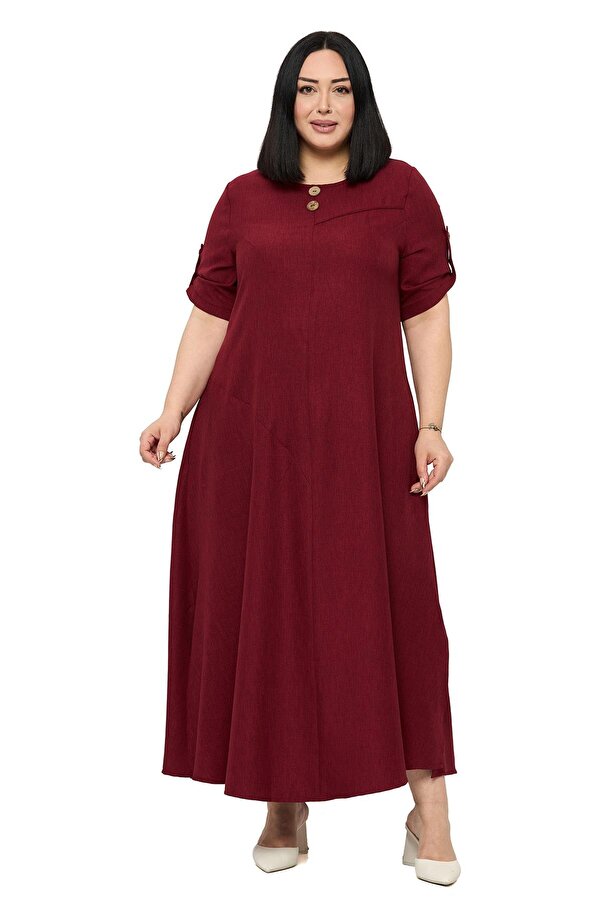
- 40% dresses. The highest conversion category in plus-size retail and the easiest to photograph. On 44 pieces that is roughly 18 pieces, or three models.
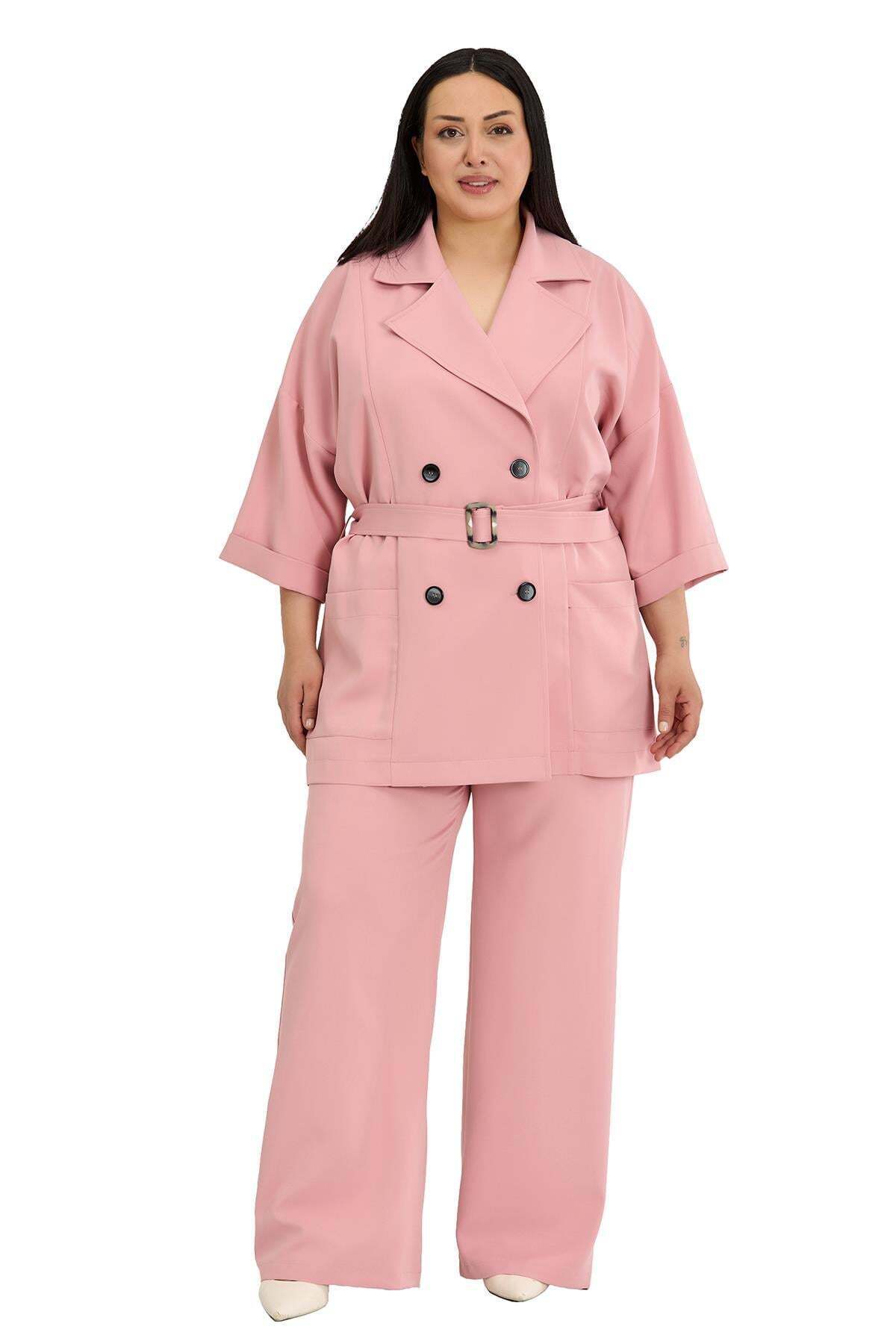
- 20% co-ord sets. High perceived value, one SKU, and they photograph as two looks. Around 9 pieces.
- 20% blouses and tops. Your add-on sale and your lowest-risk restock. Around 9 pieces.
- 10% trousers or skirts. One model only — enough to complete outfits, not enough to tie up cash in fit-sensitive bottoms.
- 10% one statement piece. A kimono, kaftan or light jacket that anchors your window and your first photos. Around 4 pieces.
- 0% experiments. Save the unusual silhouettes for order three, when you know your customer.
Choosing Your Size Curve
Four consecutive sizes, weighted to the middle. The most broadly useful curve for a new plus-size boutique is 48 ×1, 50 ×2, 52 ×2, 54 ×1 — six pieces with the depth where demand concentrates. Adjust it once you have data, not before.
- If your market skews larger (common in West Africa): shift to 50 ×1, 52 ×2, 54 ×2, 56 ×1.
- If you sell mainly to the lower plus range (common in parts of Europe): 46 ×1, 48 ×2, 50 ×2, 52 ×1.
- Stretch fabrics forgive. Jersey and viscose pieces cover a wider body range, so you can run three sizes instead of four on those models and put the saved budget into a fourth style.
- Track what sells out first. The size that empties fastest in month one is the size you buy double in month two. This single habit is worth more than any forecasting spreadsheet.
The Money Math: What $1,000 Should Return
Take Plan A: 44 pieces at roughly $24 landed each, so about $1,056 in inventory cost. Price at 2.6× landed, giving an average retail near $62.
- Realistic sell-through: 70% at full price, 30% at a 30% discount over the first 10–12 weeks.
- Full-price revenue: 31 pieces × $62 = $1,922.
- Discounted revenue: 13 pieces × $43 = $559.
- Total revenue: about $2,481 against $1,056 of stock — roughly $1,425 gross profit.
- What that funds: your second order at double the size, without new capital. That is the entire point of order one.
Practical tip: hold back 30–40% of your gross profit for a fast reorder in week 4, not week 12. The models that sell out first are the ones your customers are telling their friends about, and that window closes quickly.
Your First 30 Days, Week by Week
- Week 0 — decide. Fix your budget plan (A or B), calculate your landed multiplier, and confirm your import requirements with a local customs agent so nothing surprises you later.
- Week 1 — build and send. Browse the collection, build your order list with models, sizes within 34–60 and quantities, then send it via WhatsApp to +90 555 336 47 86. You receive stock confirmation and a proforma invoice.
- Week 1 — pay the deposit. Bank transfer against the proforma; 70% deposit and 30% before shipping is the common structure. Meanwhile, shoot nothing, promise nothing, and start building your waiting list.
- Week 2 — packing and balance. Goods are picked, checked, bagged and cartoned; final weights confirm your freight figure and you pay the balance. We ship worldwide.
- Week 3 — transit and prep. While goods move, write your product descriptions from the model photos, set your retail prices from your landed multiplier, and line up a photoshoot date.
- Week 4 — launch and observe. Photograph everything on day one, sell for 10 days, then look hard at which models and which sizes emptied. That list is your second order.
Six Mistakes That Sink a First Order
- Buying one piece of everything. You cannot read a result from a sample size of one, and you cannot serve a customer whose size you skipped.
- Buying what you would wear. Your taste is one data point among thousands. Buy for the woman who walks past your window.
- Forgetting the landed cost. Pricing off the wholesale figure quietly destroys the margin you were counting on.
- Spending 100% of your capital on order one. Keep a reorder reserve. A model that sells out and never returns costs you more than a model that never sold.
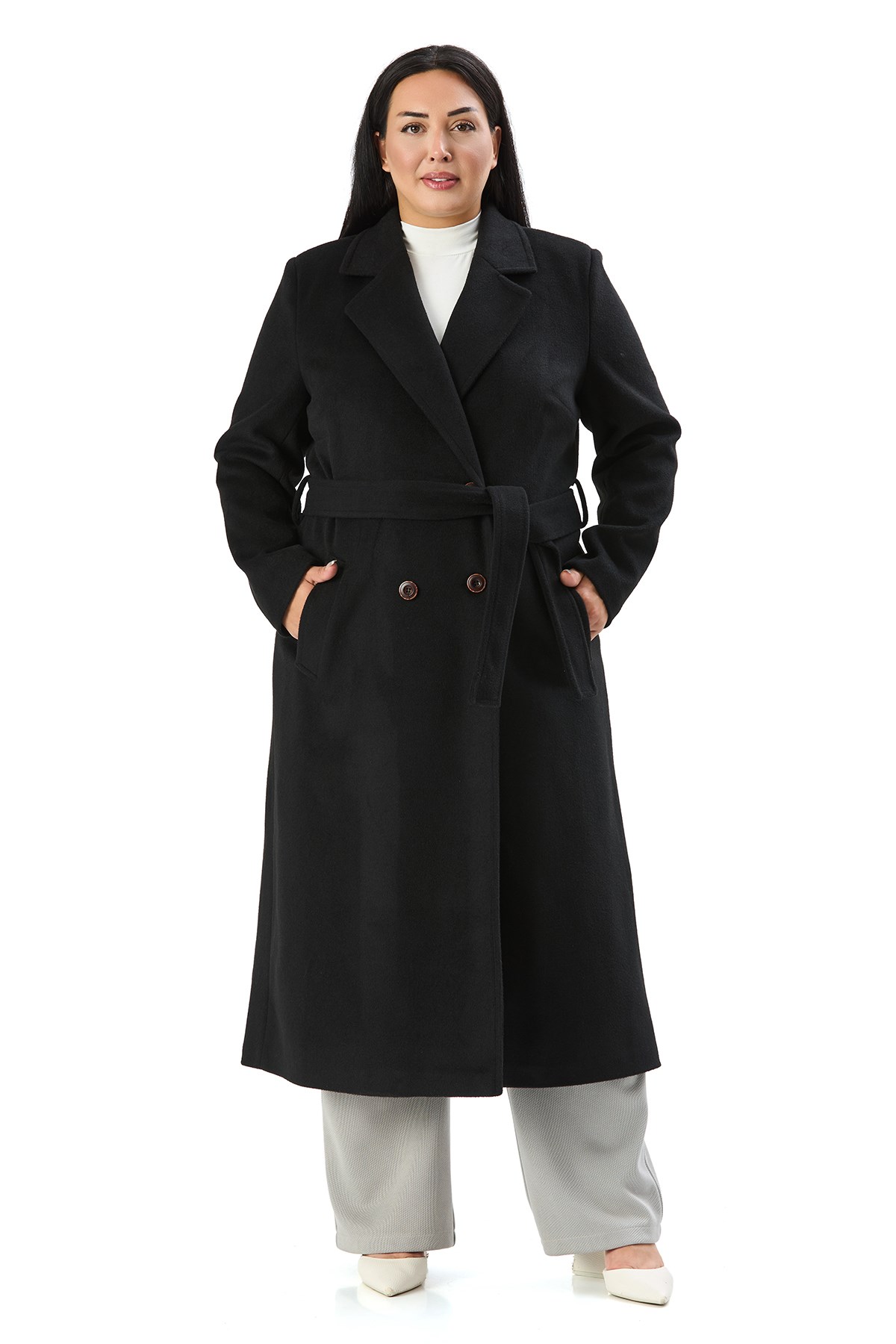
- Ordering too many outerwear pieces. Coats carry the highest unit price and the slowest turn — one or two models maximum on a first buy.
- Splitting the order into two shipments. Freight is charged in a way that punishes small consignments; consolidate into one.
A first order does not need to be perfect. It needs to be readable — enough depth in enough sizes across few enough models that at the end of a month you can point at two styles and say, with evidence, "more of these." That is a boutique starting properly.
Frequently asked questions
How much money do I need to start a plus-size boutique?
You can start meaningfully with $1,000, though how far it goes depends on whether that figure covers goods only or everything. If it is all-in, expect roughly $620 in goods and about 44 pieces after freight and duty. If it is your goods budget, plan $1,600–1,750 total capital for around 70 pieces.
How many styles should I buy in my first wholesale order?
Six to eight models, with six pieces of each across four consecutive sizes. Fewer models with depth give you readable sales data, while thirty models at one piece each teach you nothing and leave customers unable to find their size. Save variety for your third order.
What size curve should a new plus-size boutique order?
Start with 48 ×1, 50 ×2, 52 ×2, 54 ×1 — four consecutive sizes weighted to the middle. Shift the whole curve up to 50–56 if your market skews larger, or down to 46–52 if you sell mainly the lower plus range. Adjust only after your first sell-through, based on which size empties fastest.
What should I stock in a first plus-size order?
Roughly 40% dresses, 20% co-ord sets, 20% blouses and tops, 10% one trouser or skirt model, and 10% one statement piece such as a kimono or light jacket. Dresses convert best and photograph best, while co-ord sets carry high perceived value at one SKU. Leave experimental silhouettes out entirely.
What is the minimum order for wholesale plus-size clothing?
The minimum order is $400, which is typically 12–20 pieces in outerwear or 25–35 pieces in tops and dresses. A $1,000 budget clears it comfortably and lets you choose properly rather than assembling a list just to reach a threshold. You build the list on the collection page and send it via WhatsApp.
How much profit can I make on a $1,000 first order?
On 44 pieces at roughly $24 landed and priced at 2.6× landed, expect around $2,481 in revenue assuming 70% sells at full price and 30% at a 30% discount. Against $1,056 of stock that is roughly $1,425 gross profit. That figure should fund a second order at double the size without new capital.
How long does a first order take to arrive?
Plan around four weeks from decision to launch. Ordering and payment take about a week, picking and packing two to four days, air express transit three to six working days, and customs clearance two to four days with clean paperwork. Sea freight adds roughly four to six weeks.
How do I pay for my first wholesale order?
You receive a proforma invoice after your list is confirmed, then pay by bank transfer. The common structure is a 70% deposit with the remaining 30% before shipment, which keeps your capital uncommitted until goods are physically ready. Send your list on WhatsApp to +90 555 336 47 86 to start.